01 / COMPARE
Normalize the fleet
Cloudflare resource shapes become stable facets with explicit identity and equality rules, so genuine differences stand apart from server metadata.
Self-hosted Cloudflare operations
Cloudflare Fleet turns configuration from many zones into one comparable matrix, then keeps every supported mutation behind a fresh read, an exact plan, human confirmation, and scoped verification.
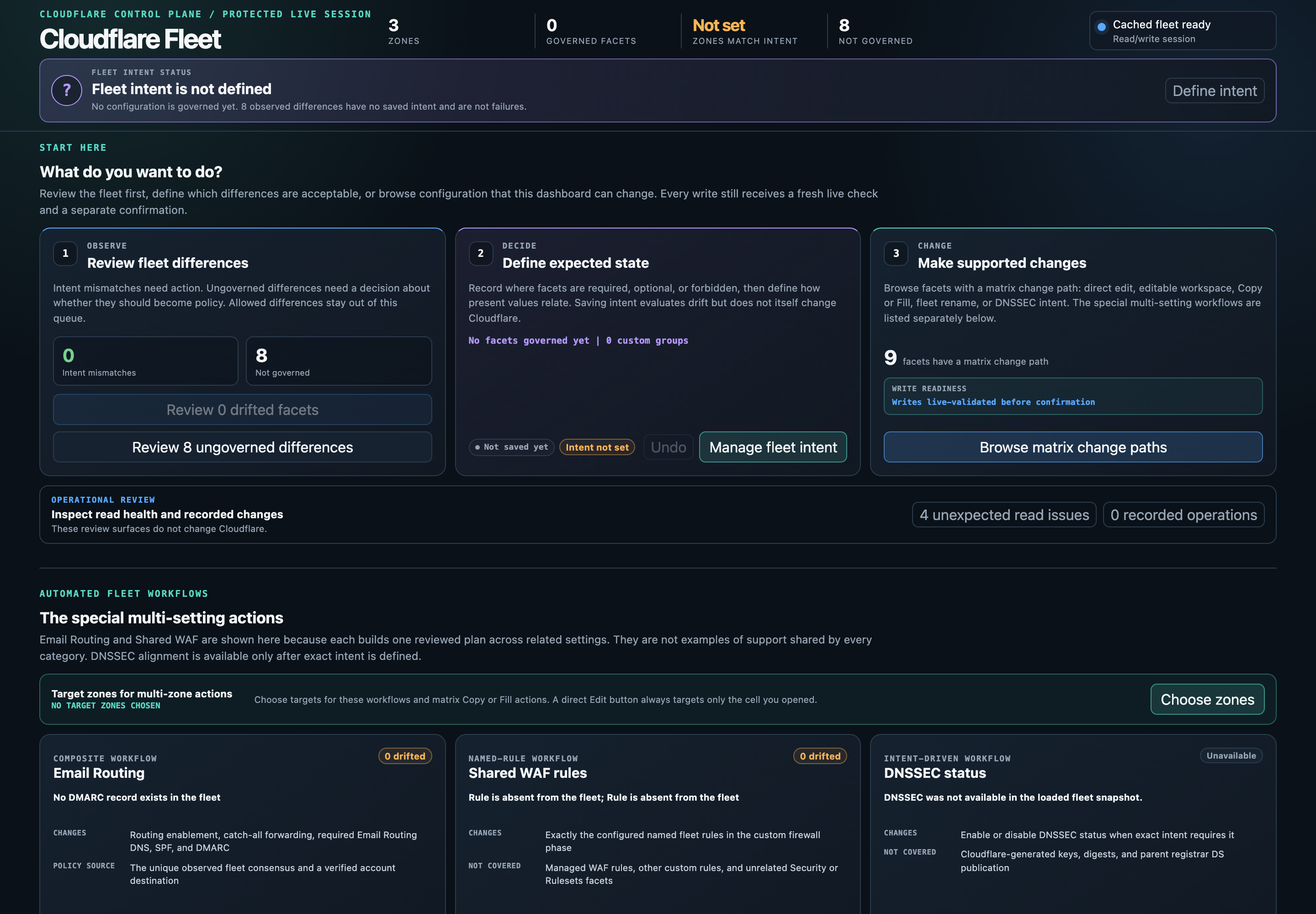
One operational workspace
Fleet opens with a decision-oriented review surface, then lets operators move from differences to expected state and finally to supported change paths.
Designed for careful operators
01 / COMPARE
Cloudflare resource shapes become stable facets with explicit identity and equality rules, so genuine differences stand apart from server metadata.
02 / GOVERN
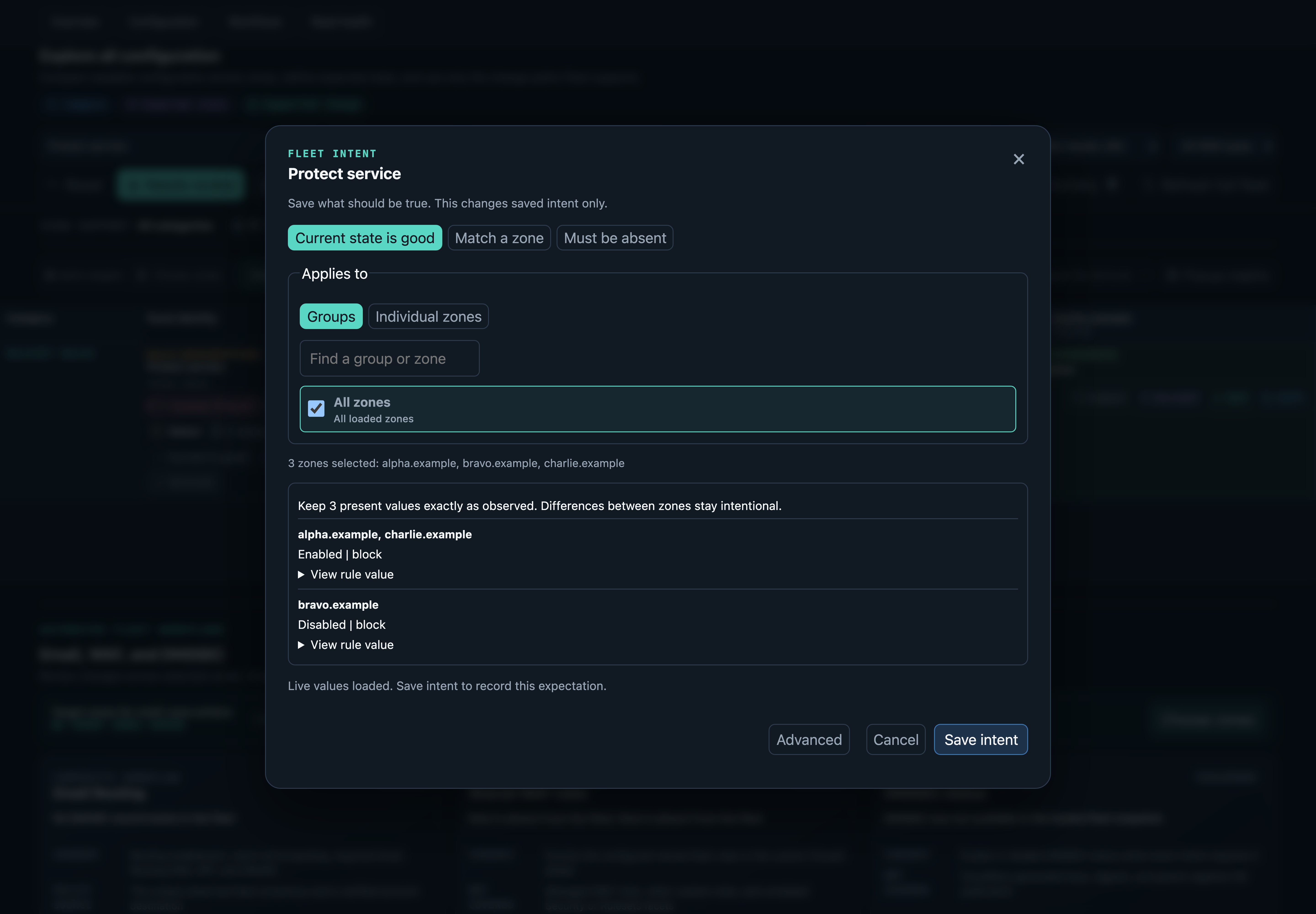
Presence and value intent compose across all zones and fixed scopes. Exact acknowledgements stay tied to one observed value, while supported drift exposes a direct alignment review.
03 / CHANGE
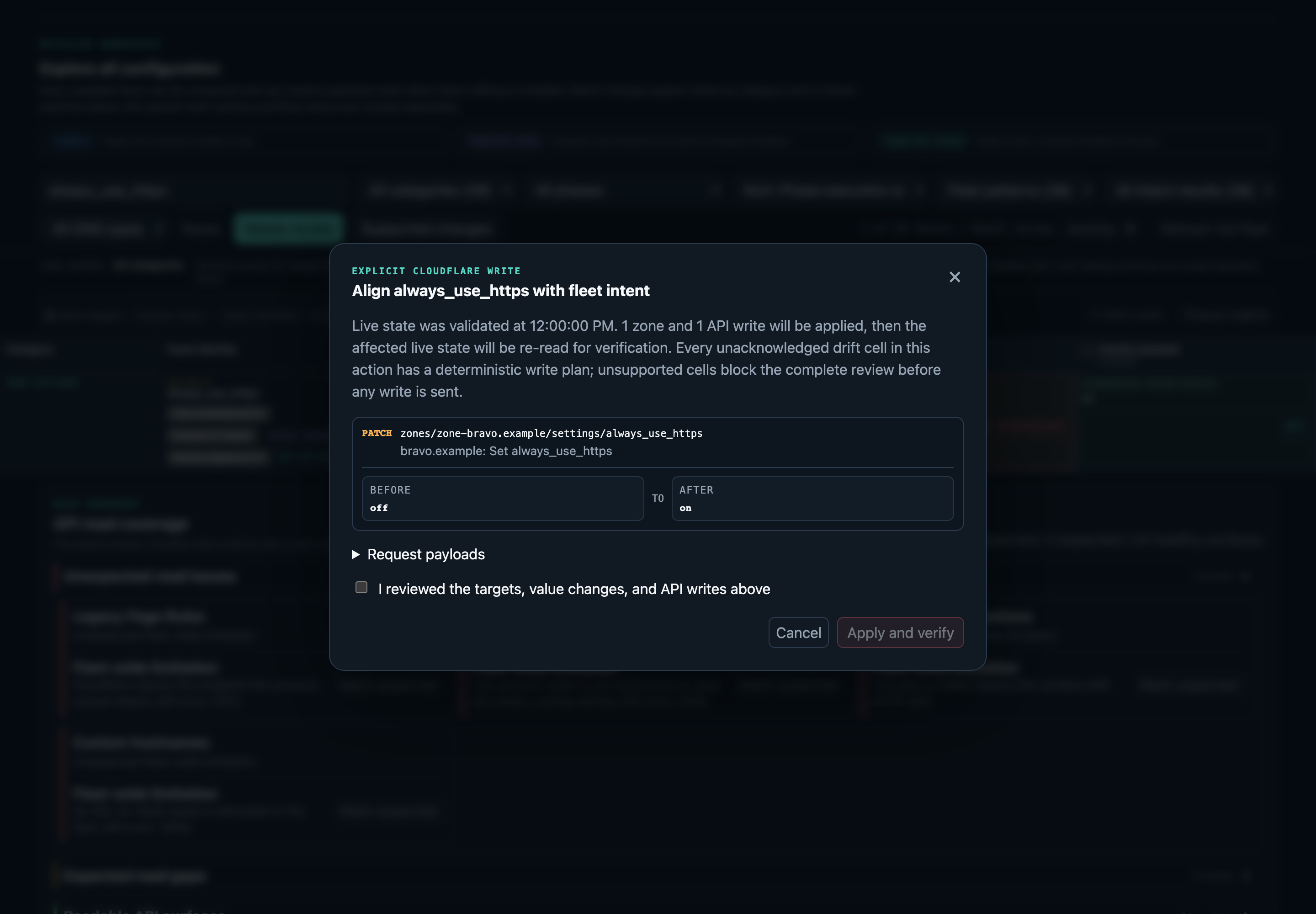
Cell, row, policy, and workflow changes reread their dependencies, produce endpoint-specific plans, save a pending journal entry, execute in order, and verify the smallest authoritative surface.
04 / ASSIST
The installed CLI and local stdio MCP server expose redacted first-run diagnosis, audit, complete intent persistence, intent alignment, bounded direct changes, activity, and guarded undo through exact plan digests, fresh replanning, and confirmation-gated writes instead of a raw API passthrough.
Everyday configuration
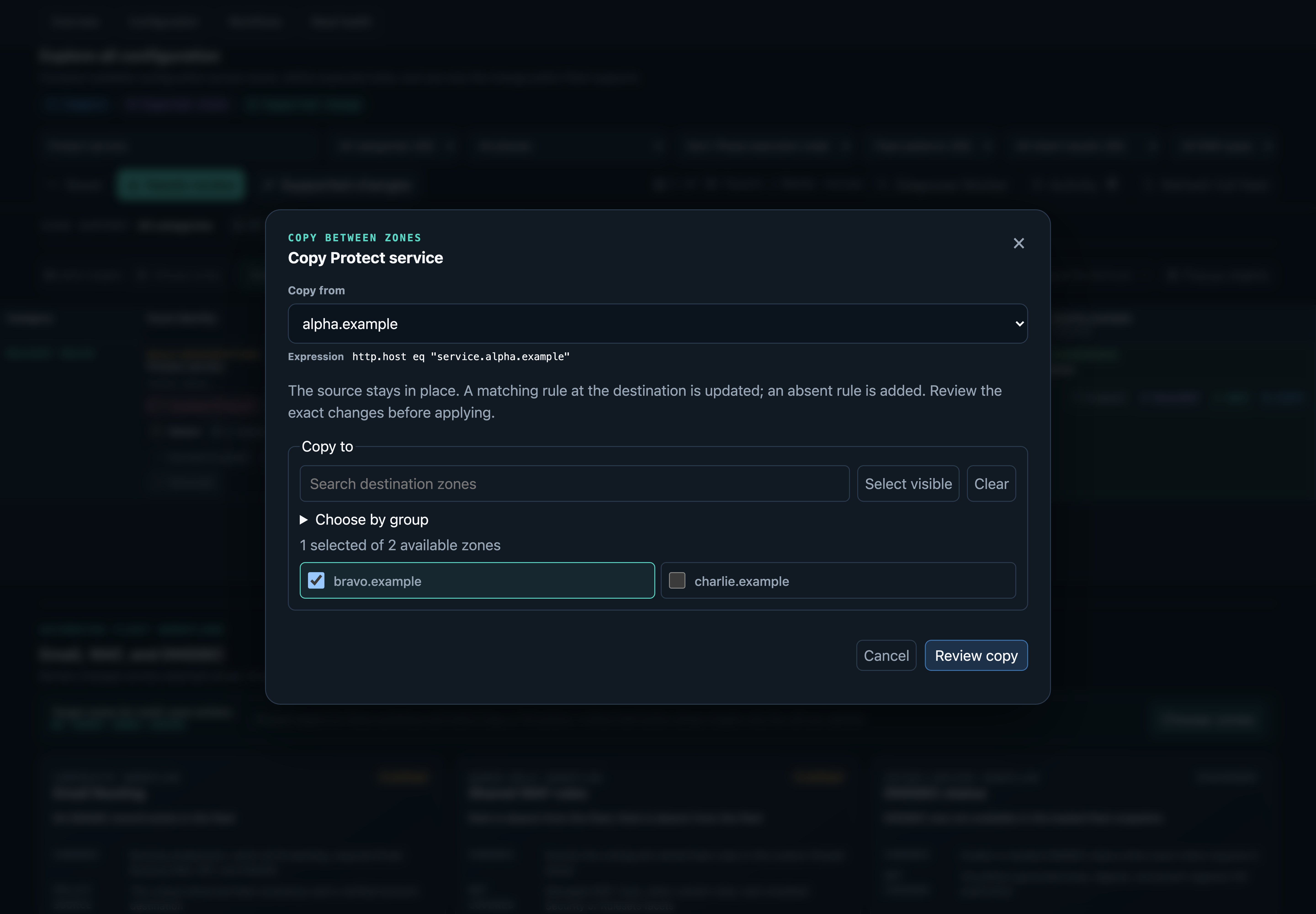
Accept current values for one facet or a selected batch, keeping deliberate differences between zones. Assign a saved expectation to several groups in one save. Copy a rule by choosing its source and destinations directly, then review the proposed changes.
From intent to action
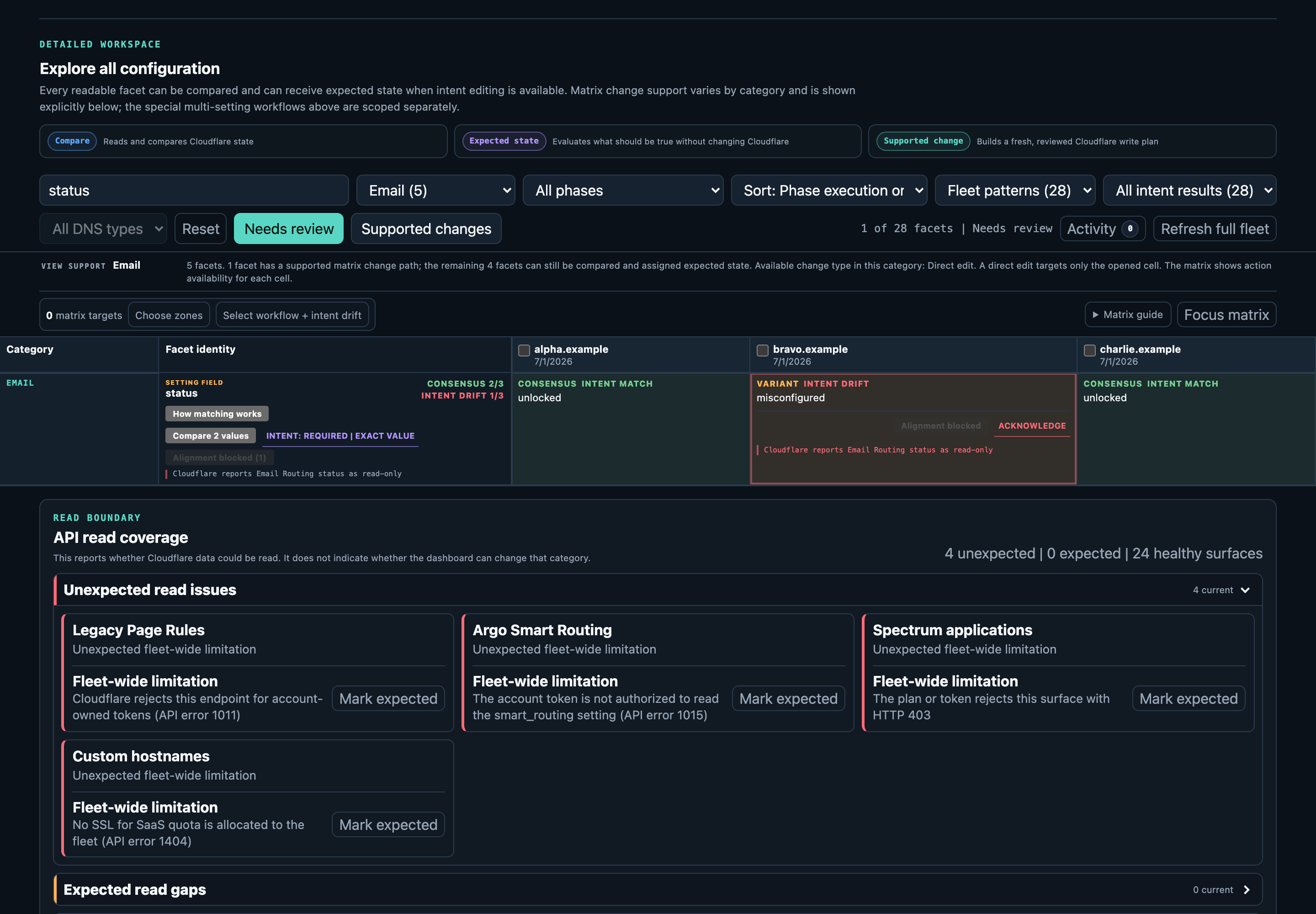
Exact and forbidden intent can produce first-class alignment actions on a policy, matrix row, or individual drifting cell. Supported adapters include zone settings, Email Routing subaddressing and wizard preferences, DNS, DNSSEC, API-managed routes, redirects, rules, strict canonical domain passthroughs, and paired hostname-scoped rate limits. Fleet refreshes the latest intent and the relevant facet across the account, then blocks the whole selected scope if any drift cell is conflicting, ambiguous, or unsupported.
Compatibility without accumulation
The typed canonical passthrough facet compares redirect status, canonical owner, path, query, and subdomain behavior together with required serving DNS and an exact empty accumulation envelope. It allows mail, ownership, DNSSEC, TLS, settings, and shared security posture while identifying each independent web attachment.
Alias intent is always required and exact. Unread relevant surfaces block convergence, supported cleanup cannot remove serving DNS or the canonical redirect as collateral, and every write still passes through fresh planning, explicit confirmation, durable activity, verification, and guarded recovery.
One scarce rule, one complete meaning
The typed rate-limit facet treats the zone's one path-based rate rule and the earlier custom WAF skip that excludes every other hostname as one required-and-exact value. An extra or missing skip is drift because it changes where the rule can act.
Cloudflare custom WAF rules execute before rate limiting. Fleet therefore creates the skip first, disables the rate rule before a hostname change, enables it last, and removes it before deleting the skip. A failed partial transition leaves the rule disabled or more broadly skipped, not active on an unintended host.
Deploy it your way
The browser application is shared. Run it behind Cloudflare Access and a Worker for durable anywhere access, or launch it through an ephemeral loopback broker on macOS. Credentials stay in the backend either way.
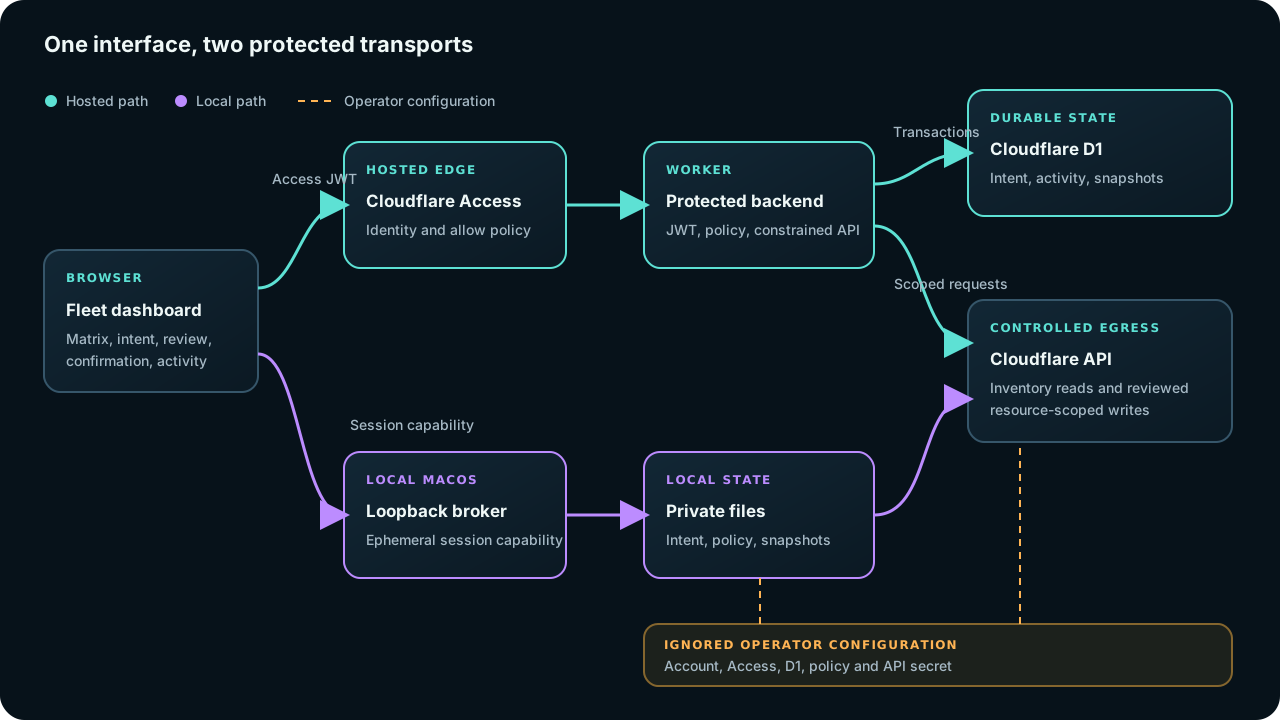
The complete operating model
CLOUDFLARE WORKER
LOCAL LOOPBACK
Desktop depth, mobile reach
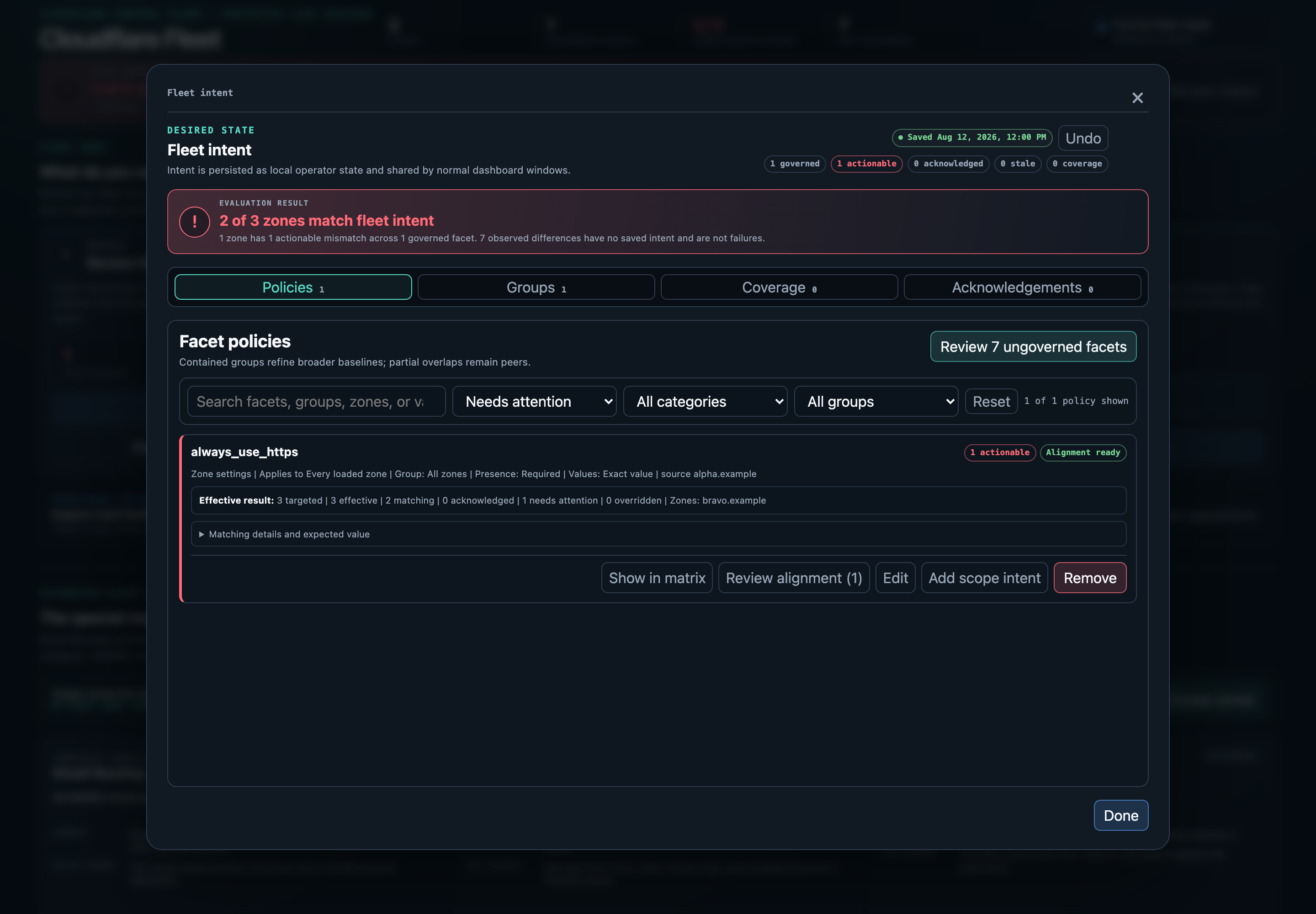
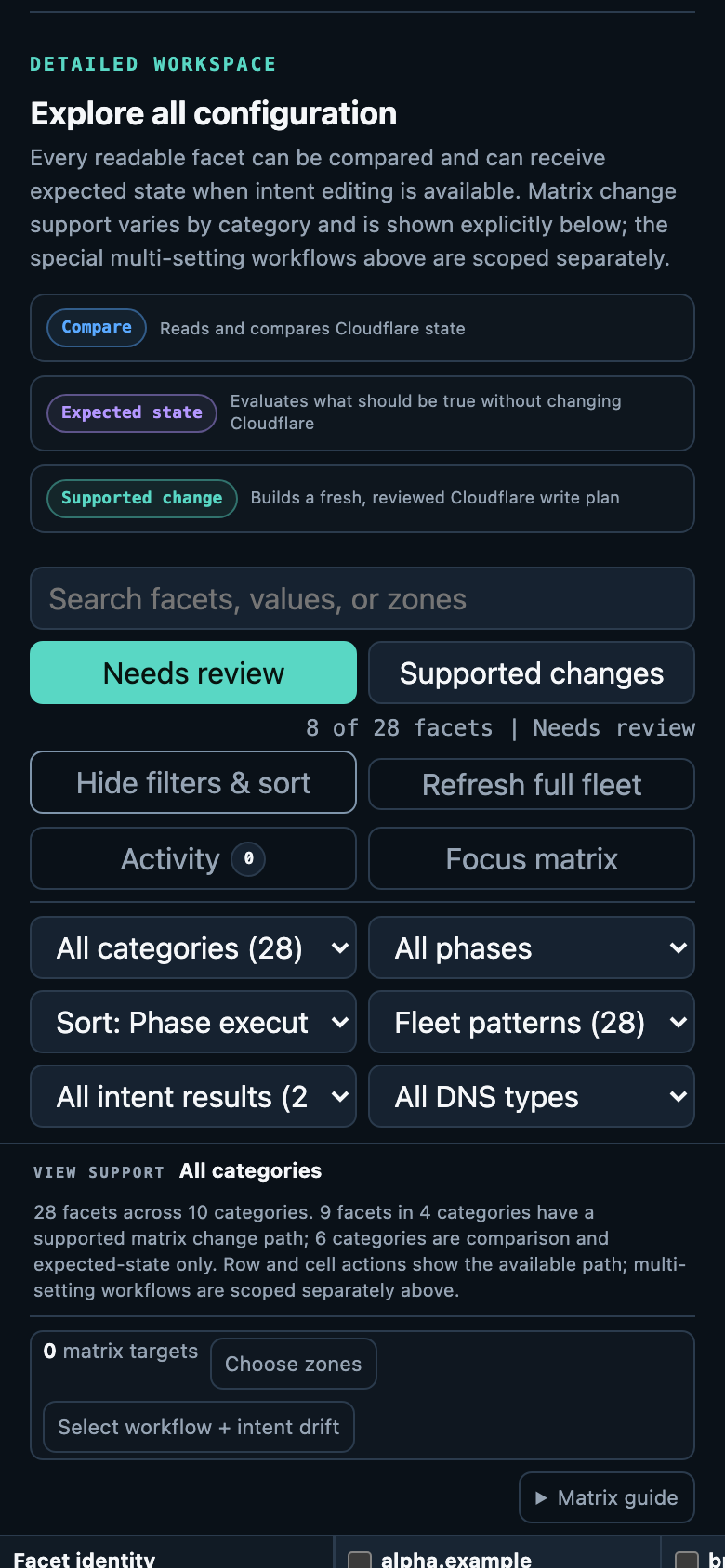
Intent management remains a focused workspace, while narrow screens expose the complete filter model without shrinking the configuration matrix into an unreadable card list.
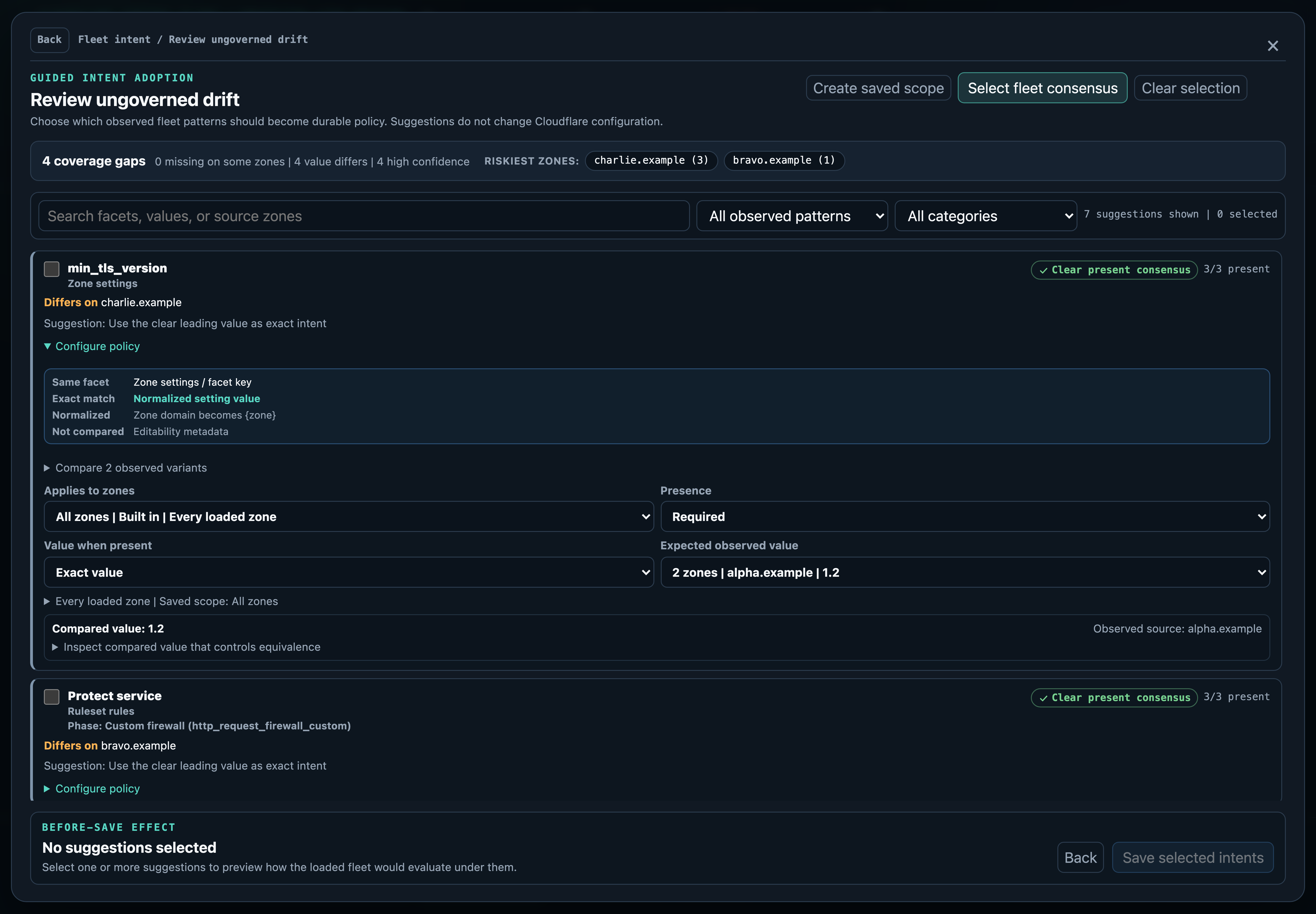
Turn drift into policy
Guided adoption leads with the coverage gaps that matter and the zones most often out of line, then keeps each suggestion scannable and its policy controls one disclosure away.
Start safely
The local dashboard and generated hosted configuration both default to read-only.